
Call us now :08071930840
 Send Inquiry
 Send Inquiry
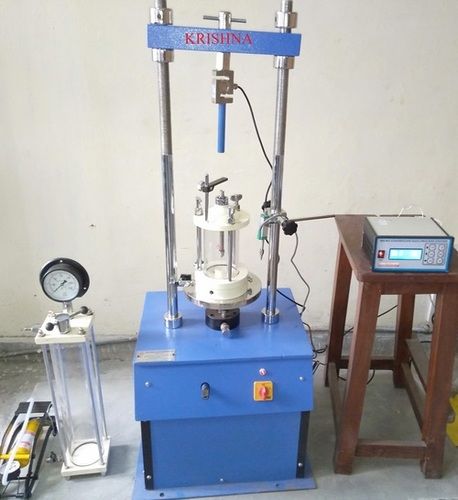
CBR Machine
Price 42000.0 INR/ Piece
MOQ : 1 Piece
CBR Machine Specification
- Material
- MS
- Frequency
- 50-60 Hertz (HZ)
- Power Supply
- Electric
- Operating Voltage
- 110-215 Volt (V)
- Hardness
- Yes
- Automation Grade
- Semi-automatic
CBR Machine Trade Information
- Minimum Order Quantity
- 1 Piece
- FOB Port
- DELHI
- Payment Terms
- Cash Advance (CA), Cash in Advance (CID)
- Supply Ability
- 101 Pieces Per Week
- Delivery Time
- 15 Days
- Sample Available
- No
- Sample Policy
- Sample costs shipping and taxes has to be paid by the buyer
- Main Export Market(s)
- Asia
- Main Domestic Market
- All India
About CBR Machine
A CBR (California Bearing Ratio) machine is a crucial piece of equipment used in geotechnical engineering to assess the strength and bearing capacity of subgrade soils and base course materials, primarily for the design of flexible pavements (like roads and runways) and foundation engineering.
Purpose and Principle:
The fundamental purpose of the CBR test is to determine the resistance of a soil sample to penetration by a standard plunger. This penetration resistance is then compared to the resistance of a standard crushed stone material. The ratio, expressed as a percentage, is the California Bearing Ratio, which provides an empirical measure of the soils strength and suitability for construction. Higher CBR values indicate stronger materials.
Key Components of a CBR Machine:
A typical CBR machine, especially in its laboratory version, consists of:
- Loading Frame: A robust and compact frame (often two-column) that provides the necessary support and rigidity for applying the load. It can be hand-operated (field type) or electromechanical (automatic).
- Penetration Piston (Plunger): A cylindrical steel plunger of a standard diameter (usually 50 mm or approximately 1.969 inches) that is forced into the soil sample.
- Load Measuring Device: This measures the force applied to the piston. It can be:
- Proving Ring: A traditional mechanical device with a dial gauge that measures deflection, which is then correlated to the applied load.
- Load Cell: A more modern electronic sensor that directly measures the applied load, often connected to a digital readout or data acquisition system.
- Displacement Measuring Device: This measures the penetration depth of the piston into the soil. It typically involves:
- Dial Gauge: A mechanical gauge with a scale to read the vertical displacement.
- Linear Potentiometric Displacement Transducer: An electronic sensor that provides highly accurate digital readings of displacement.
- CBR Mold: A cylindrical steel mold (typically 150 mm in diameter) with a base plate and a collar, in which the soil sample is prepared and compacted.
- Surcharge Weights: Annular or slotted weights placed on top of the soil sample during the test to simulate the overburden pressure of pavement layers.
- Spacer Disc: Used during compaction to create a void in the mold for the penetration piston.
- Data Acquisition and Processing System (for Automatic Machines): Modern automatic CBR machines often feature a touchscreen control unit that automates load application, records load and penetration data at predetermined intervals, calculates the CBR value, displays real-time graphs, and generates reports.
How it Works (Typical Laboratory Procedure):
- Sample Preparation: A representative soil sample is prepared, often by adjusting its moisture content to the optimum moisture content and then compacting it into the CBR mold in multiple layers (lifts) using a standard compactive effort. For some tests, the compacted sample might be soaked in water for a specified period (e.g., 96 hours) to simulate saturated conditions, and swelling is measured.
- Setup: The prepared soil sample in the mold, along with any necessary surcharge weights, is placed under the penetration piston of the CBR machine.
- Test Execution: The machine applies a controlled load to the penetration piston, forcing it into the soil sample at a constant rate (e.g., 1.25 mm/minute). The applied load and corresponding penetration depth are measured and recorded at various intervals.
- Data Analysis: A load-penetration curve is generated. The loads corresponding to specific penetration depths (typically 2.5 mm and 5.0 mm) are determined.
- CBR Calculation: The CBR value is calculated as the ratio of the measured load on the soil sample to the standard load required to achieve the same penetration on a standard crushed stone material, expressed as a percentage. If the CBR at 5 mm is greater than at 2.5 mm, the 5 mm value is usually used.
Applications:
CBR machines and the CBR test are widely used for:
- Pavement Design: Determining the appropriate thickness of pavement layers (subgrade, sub-base, base course) for roads, highways, and airfields.
- Road Construction: Assessing the quality and compaction of materials used in road beds.
- Foundation Engineering: Evaluating the bearing capacity of soils for various structures.
- Quality Control: Ensuring that construction materials meet specified strength requirements.
Modern CBR machines offer features like automatic load application, rapid platen adjustment, user-friendly interfaces, data recording and analysis, and compliance with various international standards (e.g., ASTM D 1883, BS 1377-4, EN 13286-47, AASHTO T 193). Both laboratory and field versions of CBR machines are available for different testing needs.
Precision in Soil Strength Assessment
The CBR Machine enables accurate evaluation of soil and base material stability, which is crucial for foundation design in road construction projects. Semi-automatic operation and robust MS construction ensure reliable performance. Its adaptable frequency and voltage range make it suitable for various laboratory and field setups in India.
Versatile and Durable Design
Designed with mild steel and incorporating a hardness feature, this CBR Machine withstands the rigors of frequent use. Its electric power supply and semi-automatic operation streamline the soil testing process for civil engineers and technicians. This versatility contributes to efficient and repeatable results.
FAQs of CBR Machine:
Q: How is the CBR Machine used in construction projects?
A: The CBR Machine is used to determine the bearing capacity of subgrade soil and base materials, which helps engineers design appropriate pavement thicknesses for roads and highways.Q: What is the process of conducting a CBR test with this machine?
A: The process involves preparing soil specimens, placing them in the CBR Machine, and applying load through a plunger. The resulting penetration resistance provides a CBR value, indicating soil strength.Q: When should the CBR Machine be utilized during road construction?
A: It should be used during the preliminary soil investigation phase to assess the suitability of soils before commencing pavement design and major construction activities.Q: Where is this CBR Machine typically implemented?
A: This machine is widely implemented in civil engineering laboratories, educational institutes, and field offices across India for soil analysis required in road and pavement design.Q: What are the benefits of using a semi-automatic CBR Machine with electric power supply?
A: The semi-automatic operation increases test efficiency and consistency, while the electric power supply ensures smooth operation, reducing manual effort and the risk of operator error.Q: Why is hardness an important feature in this CBR Machine?
A: The hardness attribute ensures the machines components maintain their shape and performance under repeated heavy use, enhancing reliability and longevity of the equipment.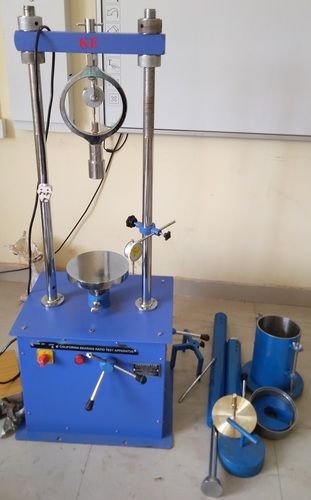
Tell us about your requirement

Price:
Quantity
Select Unit
- 50
- 100
- 200
- 250
- 500
- 1000+
Additional detail
Mobile number
Email

More Products in Soil Testing Equipment Category
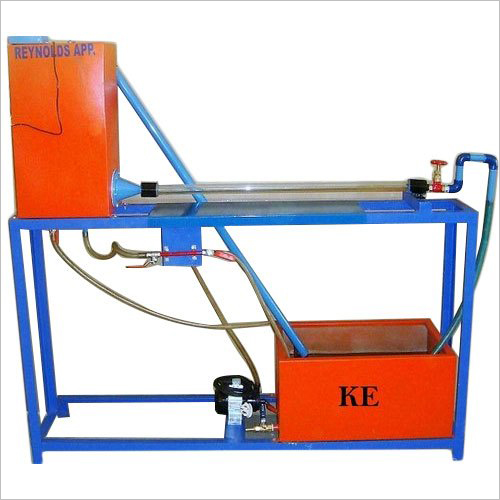
Reynolds Test Apparatus
Price 35000 INR / Piece
Minimum Order Quantity : 1 Piece
Power Supply : 230 V AC, 50 Hz
Frequency : 50 Hz
Features : Transparent glass tube, dye injection system, water tank
Usage : Educational, Laboratory
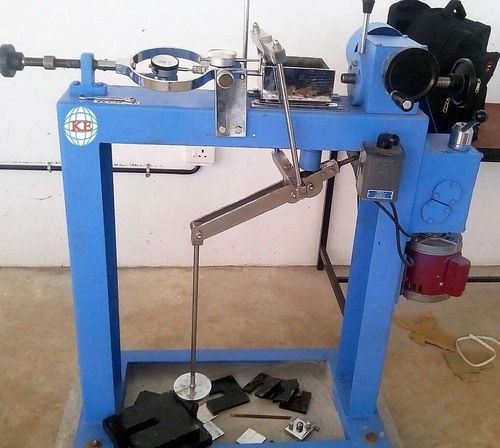
Direct Shear
Price 90600.0 INR / Piece
Minimum Order Quantity : 1 Number
Power Supply : Electric
Frequency : 5060 Hertz (HZ)
Features : Good Quality
Usage : Laboratory
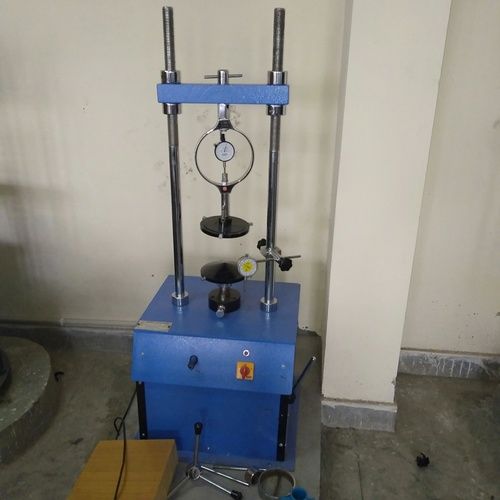
Unconfine Compression Testing Machine
Price 60500.0 INR / Set
Minimum Order Quantity : 1
Power Supply : Electric
Frequency : 5060 Hertz (HZ)
Features : Good Quality
Usage : Industrial
Triaxial Testing Machine
Price 125300.0 INR / Piece
Minimum Order Quantity : 1 Number
Power Supply : Electric
Frequency : 5060 Hertz (HZ)
Features : Good Quality
Usage : Industrial

 Send Inquiry
Our Products
- Testing Equipment
- Testing Apparatus
- Soil Testing Equipment
- Universal Testing Machine
- Bulk Density Apparatus
- Core Cutting Machine
- Electrical Machine Lab Instrument
- Heat Transfer Laboratory Equipment
- Moisture Meter
- Compression Testing Machine Channel
- Educational Trainer
- Impact Testing Machine
- Digital Bomb Calorimeter
- Roll Crusher Machine
- Electric Control Panel

D-1, Block-B Gali No.25, Mangal Bazaar, Das Garden, Baprola Vihar, New Delhi - 110043, India

Mr R. K. Yadav
(Proprietor )
Mobile :08071930840
 Send Inquiry
 Send SMS
Developed and Managed by Infocom Network Private Limited.
